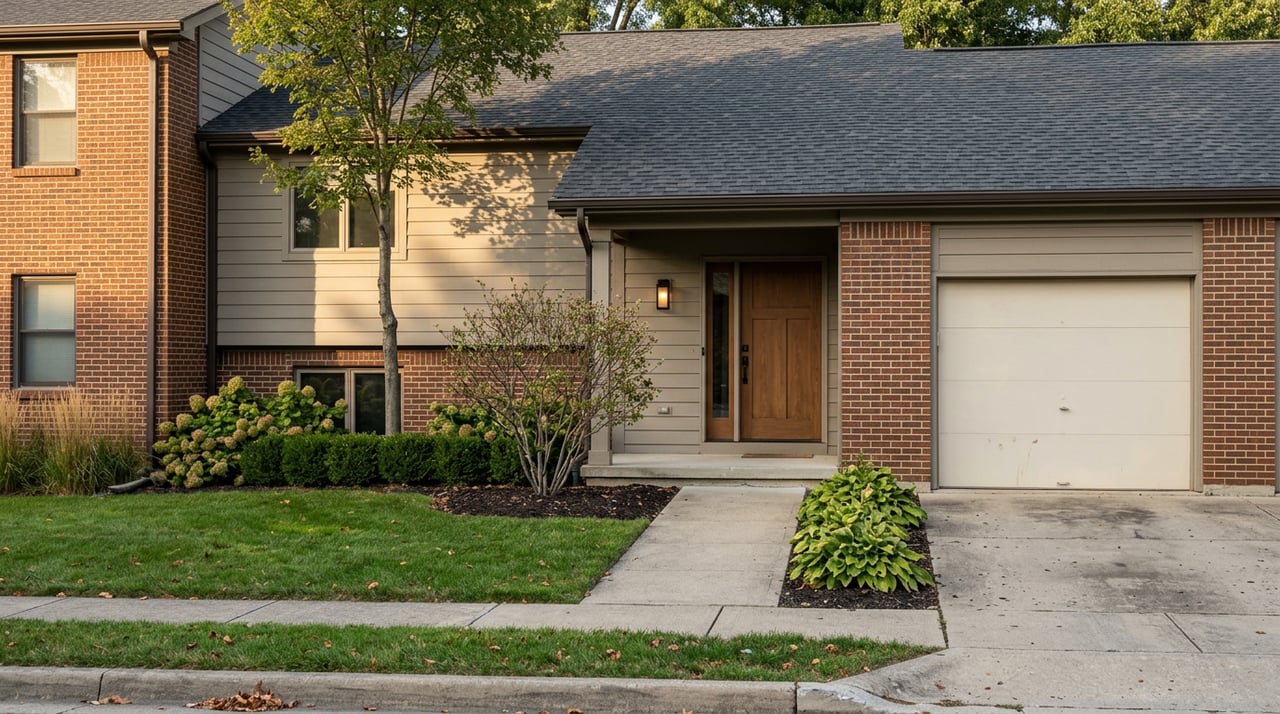
Trying to choose between a townhome and a single-family home in Joliet? You are not alone. Each option changes your monthly costs, weekend workload, and day-to-day lifestyle. In this guide, you will see how HOA fees, maintenance, outdoor space, privacy, insurance, taxes, and commute needs compare in Joliet and greater Will County. You will also get sample monthly budgets and real buyer scenarios to help you decide. Let’s dive in.
Quick market snapshot
Joliet’s numbers sit below many nearby Will County suburbs, which is why your comparisons matter. Zillow reports an average home value of about $254,571 and a median sale price near $245,750 for the city of Joliet (Jan 2026). Homes.com’s city rollup shows a median townhouse sale around $333,000 across the last 12 months. Redfin places Will County’s median sale price at about $350,000 (Jan 2026). Inventory has been tight, and Zillow shows median days-to-pending near 19 days in Joliet (Jan 2026). Always pair these big-picture metrics with neighborhood-level comps before you act.
Townhome vs single-family: key tradeoffs
Maintenance responsibilities
- Townhomes often include exterior and common-area services in the HOA. That can cover roofing on some policies, siding, landscaping, snow removal, and shared amenities. Always review the HOA’s CC&Rs and budget to confirm coverage. For a general overview of what HOAs commonly cover, see this quick explainer from AAA on HOA responsibilities: what HOA dues typically include.
- Single-family homes place most exterior work on you. Expect to handle the roof, gutters, siding, lawn care, and snow removal unless a single-family HOA provides services.
- Budgeting tip: a simple rule of thumb is to set aside 1 percent of the home’s value per year for maintenance, with 0.5–1 percent for newer homes and 2–4 percent for older ones. Learn more about the 1 percent rule here: home maintenance budget basics.
HOA fees, scope, and governance
- In Joliet listings, monthly HOA dues commonly range from about $130 to $350, with newer or amenity-rich communities toward the higher end. Dues often pay for management, common-area maintenance, master insurance, landscaping, snow removal, and amenities.
- Governance matters. HOAs may levy special assessments if reserves are low. Before you buy, ask for the CC&Rs, budget, reserve study, recent meeting minutes, assessment history, and any current litigation. National reporting has highlighted rising HOA dues and the value of strong reserves. See this overview on trends and documents to request: HOA fees and reserves to watch.
Outdoor space and lot size
- Detached homes in Joliet often provide more private yard space. City zoning shows minimum lot areas for single-family districts that help explain typical yard sizes. For example, R-1 minimum lot areas are around 10,000 square feet and R-3 minimums often 7,500 square feet. See Joliet’s zoning reference: residential lot area standards.
- Newer subdivisions in the area frequently offer lots around 0.25 acres, while townhomes typically have much smaller footprints or shared open space. Here is a local snapshot of a Joliet subdivision noting quarter-acre lots: neighborhood example with ~0.25-acre lots.
Privacy and noise
- Single-family homes do not share party walls, which tends to support more privacy and less direct noise transfer.
- Townhomes share at least one wall. Newer construction may have better sound attenuation, but it varies. If you work from home or value quiet, ask about wall type and insulation. For a clear primer on attached-home tradeoffs, review this guide to townhouses and sound considerations: townhouse buyer guide.
Insurance and property taxes
- Insurance: Townhome and condo owners often carry an HO-6 policy for interior finishes and contents, paired with the HOA’s master policy. Single-family owners typically carry a standard homeowners policy (HO-3). Verify whether the HOA master policy is “all-in” or “bare walls,” and know the master-policy deductible. More here: HOA master policies and your coverage.
- Property taxes: Will County’s effective property tax rate is roughly 2.3 percent, with median tax bills commonly in the high $6K–$7K range for a county-median home. That makes taxes a major line item in your monthly cost. See county context: Will County effective tax overview. Always pull the actual parcel bill here: Will County assessor and treasurer links.
What fits your life? Joliet scenarios
First-time buyer on a budget
You may prioritize a lower monthly payment and less weekend maintenance. In Joliet, townhomes are sometimes priced competitively, but some newer townhome communities can sell at prices that match or exceed older detached homes. Compare apples to apples by weighing HOA dues against your maintenance savings. If you plan to use FHA or first-time buyer programs, confirm whether the property is a condo or a fee-simple townhome and review financing rules accordingly.
Downsizer or empty-nester
If you want lower upkeep, single-level living, and amenities such as a pool or clubhouse, a townhome or condo can be a strong fit. Many Joliet-area communities advertise exterior maintenance, lawn care, and snow removal included, which frees up your time. Ask about pet rules, parking, guest policies, and whether you can modify interiors to fit accessibility goals.
Busy commuter to Chicago or regional job centers
Your best move is location-first, product-second. If you ride rail, look for homes near the Joliet Gateway Center that reduce your door-to-platform time. Metra serves Joliet via the Rock Island District and Heritage Corridor lines. Trip times to downtown Chicago often run about 60 to 75 minutes depending on train and schedule. Check routes and timetables here: Metra Joliet station and lines. If you drive, proximity to I-80, I-55, or I-355 ramps can save meaningful minutes daily.
Run the numbers: two sample budgets
Below are simple, illustrative comparisons using Will County’s 2.3 percent effective tax rate and the 1 percent maintenance rule. These examples exclude mortgage principal and interest, utilities, PMI, and homeowners or HO-6 premiums. Your actual costs will vary by parcel, HOA, and home condition.
Joliet city-level snapshot
| Cost item | Townhome example | Single-family example |
|---|---|---|
| Home price (source/date) | $333,000 (Joliet townhouse median, Homes.com 12-mo) | $245,750 (Joliet median sale, Zillow, Jan 2026) |
| HOA dues (est.) | $200/mo (within common local range) | $0 |
| Property tax (2.3%) | ~$638/mo | ~$471/mo |
| Maintenance reserve (1%) | ~$278/mo | ~$205/mo |
| Illustrative subtotal | ~$1,116/mo | ~$676/mo |
Note: Townhome owners may see lower out-of-pocket exterior costs because the HOA covers some items, but that savings is already reflected through the HOA line.
County-level equal-price snapshot
| Cost item | Townhome example | Single-family example |
|---|---|---|
| Home price (source/date) | $350,000 (Will County context, Redfin, Jan 2026) | $350,000 (Will County context, Redfin, Jan 2026) |
| HOA dues (est.) | $250/mo (mid-range) | $0 |
| Property tax (2.3%) | ~$671/mo | ~$671/mo |
| Maintenance reserve (1%) | ~$292/mo | ~$292/mo |
| Illustrative subtotal | ~$1,213/mo | ~$963/mo |
What to verify before you decide
- Confirm the geography and source for any price stat you use, and include the date. City of Joliet vs Will County medians can differ.
- For a townhome or condo, request the CC&Rs, budget, reserve study, recent meeting minutes, assessment history, and any current litigation. Special assessments are a key risk to understand. See this overview: HOA fees and reserves to watch.
- Ask whether the HOA master policy is “all-in” or “bare walls,” and confirm the master-policy deductible. Match your HO-6 accordingly. Learn more: HOA master policies and your coverage.
- Run a maintenance reserve using the 1 percent rule as a baseline, with a lower bound near 0.5–1 percent for newer homes and a higher bound of 2–4 percent for older ones. Quick primer: home maintenance budget basics.
- Pull the property’s current tax bill and confirm available exemptions through Will County. Context here: Will County effective tax overview and assessor/treasurer links.
- If commuting by rail, check actual Metra timetables for your time window and note the difference between Rock Island District and Heritage Corridor service: Metra Joliet station and lines.
Bottom line
If you value low exterior upkeep and community amenities, a townhome can fit well in Joliet, especially for downsizers and first-time buyers who want predictable weekends. If privacy, a larger yard, and maximum control over your property matter most, a single-family home often wins. Because Joliet townhome prices can overlap with older detached homes in some neighborhoods, the best choice comes down to your monthly math, your maintenance tolerance, and where you need to be each day.
Ready to compare exact neighborhoods, HOA documents, and parcel-level taxes side by side? Connect with a Hexagon Real Estate agent to review local comps, run the numbers, and find the right fit for your lifestyle.
FAQs
What are current home prices in Joliet?
- Zillow reports an average value near $254,571 and a median sale price around $245,750 for the city of Joliet as of Jan 2026; Will County’s median sits higher near $350,000 per Redfin.
How much are HOA fees for Joliet townhomes?
- Many Joliet-area townhome communities show monthly dues between about $130 and $350, with higher fees in newer or amenity-rich developments; confirm inclusions, reserves, and assessment history.
How do Will County property taxes affect my budget?
- With an effective rate around 2.3 percent, taxes are a major monthly cost; estimate using the rate for planning, then verify the parcel’s actual bill and exemptions through the Will County assessor.
Which is better for a Chicago commute: townhome or single-family?
- Either can work; prioritize location near the Joliet Gateway Center for rail or near I-80/I-55/I-355 ramps for driving; check timetable specifics for the Rock Island District vs Heritage Corridor lines on Metra.
What documents should I review before buying a Joliet townhome?
- Request the CC&Rs, budget, reserve study, recent meeting minutes, assessment history, master-policy details, and any current litigation to understand coverage, fees, and special-assessment risk.