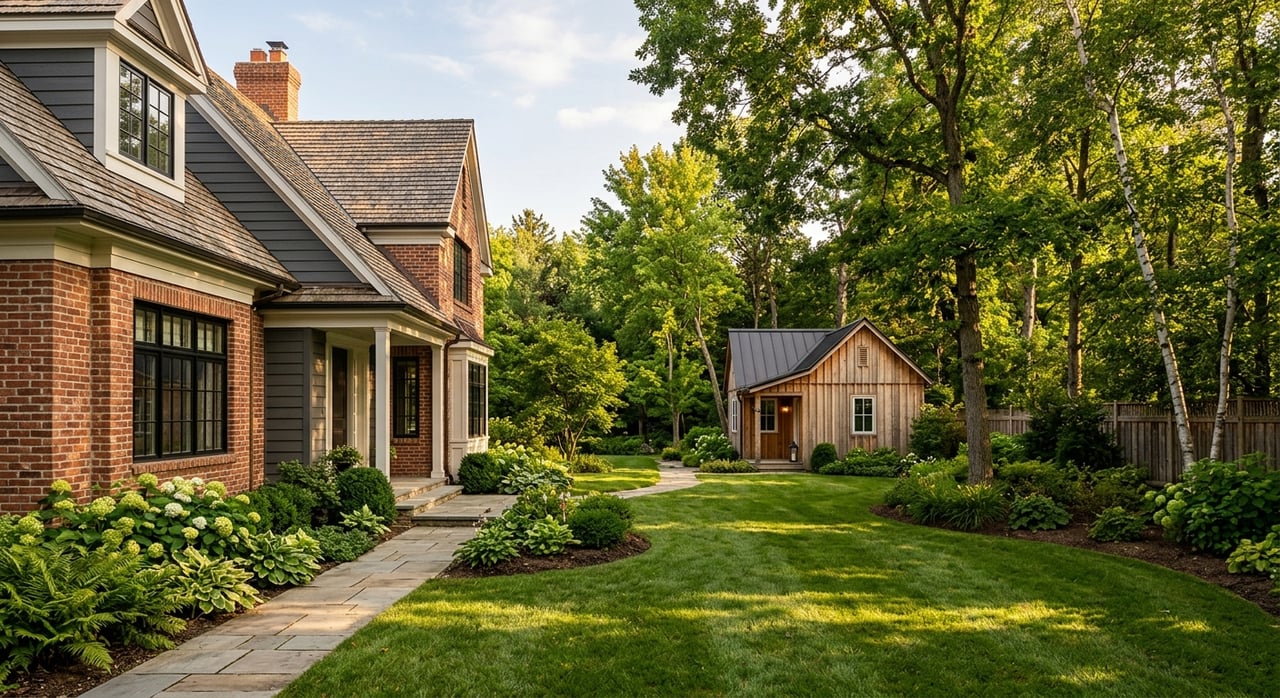
If your Braidwood property comes with land, you are not just selling a house. You are selling how that land works, what it offers, and why it matters to the next owner. That can feel tricky, especially in a market where standard home comps do not always tell the full story. In this guide, you will learn how to market a Braidwood home with land or acreage in a way that is clear, accurate, and compelling. Let’s dive in.
Why acreage needs its own strategy
In Braidwood, land can be one of the most important parts of a listing, but only if buyers understand it. The city is a small, mostly owner-occupied community in Will County, with an estimated 6,259 residents in 2025 and an owner-occupied housing rate of 86.8%. The Census Bureau also estimates a median owner-occupied home value of $202,500.
Will County reporting adds useful market context. In early 2025, Braidwood had one of the county’s lowest median list prices at $190,000, while the countywide median sales price for owner-occupied houses was $347,300. That gap means sellers often need to explain the value of the land itself, not just rely on a price-per-square-foot comparison.
What buyers want to understand
When buyers look at a home with acreage, they usually have practical questions right away. They want to know where the boundaries are, how the land is used, what improvements are on site, and whether the open space is truly usable.
In Braidwood and rural parts of Will County, those questions matter even more. County planning materials describe rural development as large-lot and agriculture-oriented, and they note that residents in these areas should not expect urban services like public water, sanitary sewer, or stormwater facilities in every location. That makes accurate documentation and straightforward marketing especially important.
Start with the land records
Before your listing goes live, the first step is to confirm what you are actually marketing. Will County’s GIS Data Viewer can help with orientation by showing parcel data, aerial imagery, land use, hydrology, soils, flood zones, and other layers that help explain the site.
That said, county GIS is not a substitute for a survey. Will County states that a plat of survey is a field-surveyed, certified drawing, and that assessment maps or subdivision plats should not be used in its place. The county also notes that older surveys can become obsolete, so if acreage is part of your value story, it is smart to verify whether you have a current survey before advertising lot size or boundary features.
Key land details to verify
Before marketing begins, it helps to confirm:
- Parcel boundaries
- Total lot size or acreage
- Driveway location and access points
- Outbuilding placement
- Tree lines, trails, and drainage features
- Flood zone or wetland areas, if applicable
- Easements or restrictions that affect use
These details shape how buyers see the property. They also help prevent confusion during showings and negotiations.
Check permits and zoning early
If your property includes a shed, detached garage, deck, fence, barn, or other exterior improvement, buyers may ask whether it was properly approved. It is better to answer those questions upfront than scramble later.
For properties inside Braidwood city limits, the city provides permit applications for items like fences, sheds, detached garages, decks, pools, roofs, and new homes. The city also provides access to its zoning map. In unincorporated Will County, the Land Use Department handles zoning and building permit review for compliance with setbacks and proposed uses.
There is also an important distinction for agricultural structures. Will County’s building ordinance says some agricultural work may qualify for a no-fee permit, but plumbing and electrical still require permits, and residences plus their water and septic systems are not exempt. If you are marketing a hobby farm setup, barn, or similar outbuilding, accurate permit status matters.
Use visuals that explain the acreage
Acreage listings benefit from media that helps buyers understand the layout fast. Ground-level photos are still important, but they usually do not tell the whole story when the parcel is a major selling point.
Aerial photography can help show the parcel shape, driveway path, relation between the home and outbuildings, tree cover, trails, drainage patterns, and how the property sits against surrounding open space. In a land-heavy listing, this kind of visual context can make the difference between interest and confusion.
Smart media for a Braidwood acreage listing
A strong marketing package may include:
- Professional listing photography
- Aerial images showing parcel orientation
- 3D tour media for the home itself
- Clear captions identifying key site features
- A simple map view to help buyers understand layout
Hexagon Real Estate emphasizes this kind of professional presentation because buyers respond best when the home and land are easy to interpret.
Drone media should be compliant
If drone footage is used for commercial real estate marketing, it must follow FAA Part 107 rules. The FAA says business use of small drones requires compliance with Part 107, including remote pilot certification, registration, visual line of sight, and operating rules for time and conditions.
The FAA also notes that state and local governments may regulate issues tied to land use, privacy, trespass, and imaging. In practical terms, marketing should avoid footage that suggests rights or access the seller does not actually have. If a nearby field, trail, or open area is not part of the property, the listing should make that clear.
Tell the truth about the setting
One of the biggest mistakes in acreage marketing is trying to make a rural property sound suburban. Buyers usually do better when the listing explains the setting honestly and clearly.
Will County’s rural guidance says agricultural activity remains the primary use in rural areas and may involve odors, dust, noise, and equipment traffic. If your home backs to farmland or open rural ground, that should be part of the conversation. The goal is not to hide those conditions, but to give buyers an accurate picture of what daily life may include.
Frame nearby open space carefully
Braidwood has access to notable outdoor assets that can support an outdoor-oriented lifestyle story. Will County lists Braidwood Dunes and Savanna Nature Preserve among its preserves, and the Illinois Department of Natural Resources says the Mazonia-Braidwood complex includes the 2,640-acre Braidwood Lake Fish and Wildlife Area south of Braidwood.
That said, it is important to distinguish between nearby recreation and private property rights. A good listing can mention access to area preserves and outdoor destinations without implying that adjacent land is part of the parcel or available for private use.
Price the house and land together, but not the same way
Pricing a Braidwood home with acreage takes more than pulling a few nearby home sales. Land-heavy properties often need a more layered pricing story because buyers are evaluating both the residence and the site.
Will County’s Supervisor of Assessments says market value is the most probable sale price in a competitive and open market, and that assessments are generally based on one-third of market value. The county also notes that market value may be derived from market data, cost, or income approaches, with land value added in the cost approach.
That framework matters because not all acreage contributes value in the same way. Usable land, access, outbuildings, and site utility can affect value differently than woods, wet areas, floodplain, or restricted ground.
Land features that can affect pricing
When pricing an acreage property, it helps to separate value drivers such as:
- Buildable or usable ground
- Pasture or open land
- Woods and trails
- Outbuildings and support structures
- Floodplain or wetland area
- Easements or use restrictions
- Access and layout efficiency
This is one reason standard home comps can fall short. A property with similar square footage may compete very differently if the site offers more practical use, better access, or more complete improvements.
Do not guess on taxes or assessments
Buyers often assume a larger parcel automatically means much higher taxes. That is not always true.
Will County explains that tax bills are driven by equalized assessed value and tax rate. Sellers should avoid broad assumptions and instead verify current tax facts for the property.
Some parcels may also have assessment treatment that changes how buyers view carrying costs. Will County states that open-space land is generally 10 acres or more and must have been used for open-space purposes for three years before applying. The county also says conservation stewardship assessment may apply to 5 or more contiguous acres of unimproved woodland, prairie, wetlands, or other undeveloped land, while farmland is assessed by soil type and productivity.
If your property has one of these statuses, it should be verified and described accurately. It should not be marketed as a generic residential lot if the assessment treatment is more specific.
Make showings easier to follow
Acreage can be impressive in person, but only if buyers know what they are seeing. A showing should help them understand where the private usable ground is, where any shared or restricted areas begin, and what parts of the property need regular maintenance.
Clear boundary communication helps avoid confusion. Simple labels, printed parcel visuals, and direct explanations about access, drainage, and seasonal conditions can make a big difference during a tour.
Showing tips that help buyers picture ownership
During showings, it helps to:
- Identify major boundary lines clearly
- Point out access routes and turnaround areas
- Explain which outbuildings serve which purpose
- Note any drainage patterns or wet spots
- Clarify what is private land versus nearby open space
- Share what seasonal maintenance may involve
Buyers tend to feel more confident when they can connect the listing photos, the map, and the in-person experience.
Why local marketing matters in Braidwood
A Braidwood acreage property needs more than broad exposure. It needs messaging that matches the way local buyers and relocating buyers evaluate land in Will County.
That means using accurate land documentation, strong pricing logic, and professional visual marketing to explain the full opportunity. It also means communicating clearly about rural conditions, property improvements, and what makes the parcel functional in everyday life.
With the right strategy, land stops being a question mark and starts becoming part of the value. If you are preparing to sell a home with land in Braidwood, working with a local brokerage that understands both residential marketing and acreage presentation can help you tell that story with confidence. When you are ready to plan your next move, connect with Jim Ludes.
FAQs
How do you market a home with acreage in Braidwood?
- The strongest approach is to market the house and the land together while clearly explaining boundaries, usable ground, outbuildings, access, and any restrictions or rural conditions.
How do you verify lot size for a Braidwood acreage listing?
- Will County GIS is useful for orientation, but Will County says a current plat of survey is the proper way to confirm boundaries and lot size when acreage is part of the value proposition.
Do outbuildings in Braidwood need permits?
- For properties in Braidwood city limits, the city provides permit applications for items like sheds, detached garages, decks, and fences, while unincorporated properties are reviewed through Will County zoning and building processes.
Can you use drone footage to market Braidwood land?
- Yes, but commercial real estate drone work must follow FAA Part 107 rules, and marketing should not imply access or use rights the property does not include.
How should you price a Braidwood home with land?
- Pricing should account for more than house size by separating value drivers like usable acreage, access, outbuildings, woods, trails, and any floodplain, wetland, or easement impacts.
Do rural conditions matter when selling a Braidwood acreage property?
- Yes. Will County’s planning guidance says rural areas may include agriculture-related dust, odors, noise, and equipment traffic, so buyers should be given a clear and accurate picture of the setting.
Can special assessments affect a Will County acreage listing?
- Yes. Will County says some parcels may qualify for open-space, conservation stewardship, or farmland assessment treatment, which can affect how buyers evaluate carrying costs.